
More than a year ago, what is known as the most stringent "Restricting plastic order" in history officially came into force, stipulating that the national catering industry banned the use of non degradable disposable plastic straws. As a result, paper straws have entered the market and become the preferred substitute for plastic straws. However, after more than a year, paper straws have been hard to find in the market.
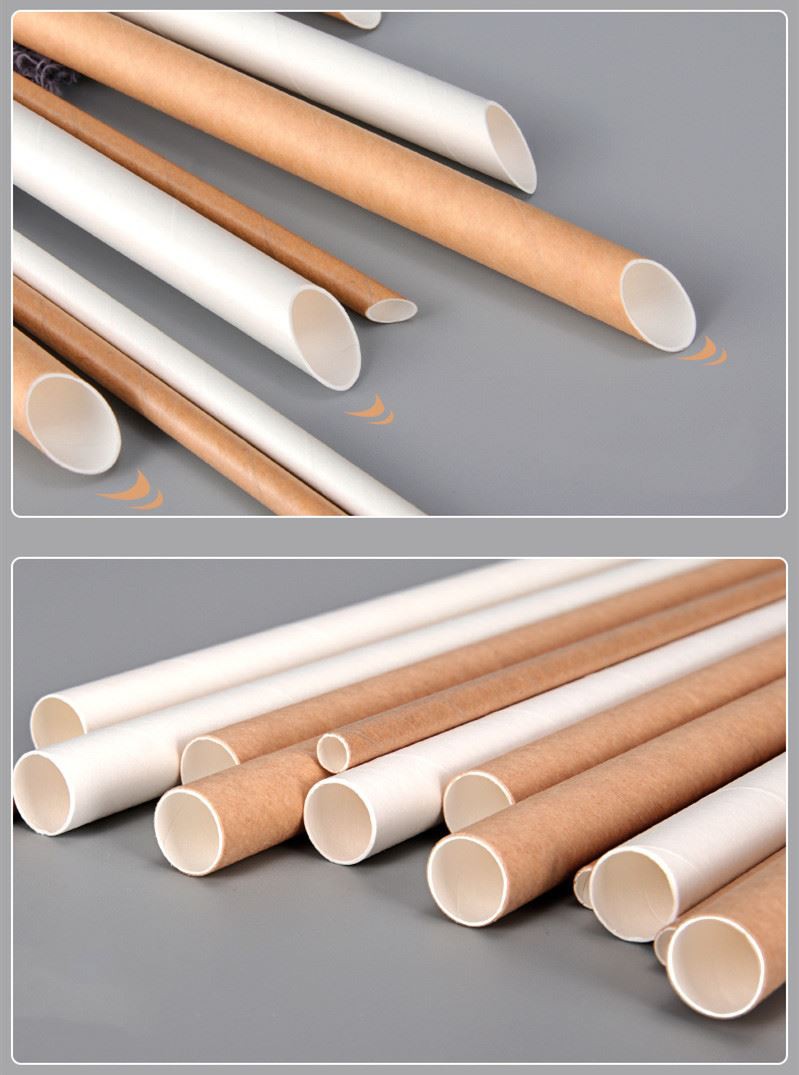
1. Paper straws produced for environmental protection, bigger trouble
In order to the meet the needs of environmental protection, many restaurants have switched to disposable paper straws, which has caused quite a controversy on the Internet. The reason is that paper straws, apart from being a bad experience and having a strange smell, are unacceptable to many people. But let's put aside the question of whether the straws we use are actually healthy or not.
The Zhejiang Consumer Rights And Interests Protection Commission recently sampled paper straws provided by 10 physical stores of milk tea drinks in Hangzhou and commissioned third-party testing agencies to conduct comparative tests. The results showed that some paper straws had excessive consumption of potassium permanganate and unqualified temperature resistance.
The term potassium permanganate is estimated to be familiar to you. According to technicians, potassium permanganate consumption refers to the total amount of all substances that can be oxidized by potassium permanganate and transferred from food contact materials to aqueous food simulants under certain conditions.
These harmful substances may stay in the human body for a long time after entering the human body, affecting the normal metabolism of the human body and endangering human health.
2. Polylactic acid straw showed up on the market
The once popular paper straw has been rarely seen. A degradable straw called PLA has occupied the mainstream. The outer package of these straws is marked: PLA straws are also called polylactic acid straws. They take starch extracted from plants such as corn, wheat and cassava as raw materials and can be fully biodegradable.
In a beverage store, the reporter observed that the appearance and hardness of this degradable straw called polylactic acid are almost the same as that of plastic straw.
They told reporters that its applicable temperature is about - 10 ℃ to 70 ℃. Cold and hot drinks can be met. Compared with paper straw, most consumers also prefer this polylactic acid straw.
According to the person in charge of a beverage brand, the purchase cost of their plastic straws is about 0.05-0.06 yuan, the paper straws are about 0.07-0.08 yuan, and the polylactic acid straws are about 0.12-0.13 yuan. Despite the high cost, they decided to replace most straws with polylactic acid straws from the perspective of user experience.
3. Domestic paper straw orders shrink sharply
One side is the expansion of polylactic acid straw, and the other side is the loneliness of paper straw. For paper straw manufacturers, the experience of the past year is like a roller coaster, which is still dealing so far.
In a paper straw factory in Zhejiang, the reporter saw that only 5 of the 24 machines in the factory were in the on state, and there were only two or three workers in production. A production worker told reporters that at the beginning of last year, when their orders were the hottest, all the machines were put into operation and it took two shifts to complete the production plan. Now it can be said that it is particularly leisurely compared with that time.
The production leader of a paper products company in Zhejiang said: the output of this machine is at least 890000 pieces per day. At the busiest time, a machine can produce 140000 pieces at most.
The general manager of a paper products company in Zhejiang said that from October 2020 to April 2021, the production capacity of paper straws can be three to five million per day, and hundreds of boxes of goods will be delivered every day. Then the PLA (polylactic acid straw) came out. The bosses of milk tea shops said that the customer experienced that the paper straw was not good, the sales fell, and there were no orders.
The market of domestic paper straw has turned sharply downward, which once plunged her company into a trough. However, in the second half of last year, with the improvement of the international epidemic situation, she finally found a turnaround through export trade. At present, the production of foreign orders of paper straw accounts for more than 70%, but the production capacity is still less than one fifth of that in the peak period. At present, she is developing bamboo pulp paper straw to improve the competitiveness of products, Many peers have already started to sell off equipment and choose to stop production or change production.
4. Short shelf life, reduced performance and high scrap rate of polylactic acid straw
The sales volume of paper straw is poor. Will polylactic acid straw, which is highly expected by the industry, become a new substitute and occupy the market on a large scale? At present, the market performance of polylactic acid straw is far from meeting expectations, and we need to make efforts in many ways in the future.
In the warehouse of a straw enterprise in Yiwu, Zhejiang Province, the person in charge of the enterprise is discussing with the warehouse keeper the disposal of a batch of expired straws. This is a batch of polylactic acid straws produced by them in early 2021. Due to the expiration of the one-year warranty period, the quality has been greatly reduced because they have exceeded the one-year warranty period, and they have been degraded and crushed by hand. There are nearly 3000 boxes of such discarded straws in this warehouse, with a loss of about 4.5 million yuan.
5. To seek a greatest common divisor is a key during the transition period
"Paper straws and PLA straws will be the choice of most restaurant companies until more reasonable and low-cost environmental straws are produced in the market."
Obviously, the implementation of any measures will take time, restaurant enterprises in this transition period, can only try to find a balance between cost and consumption experience.
Obviously, the implementation of any measures will take time, restaurant enterprises in this transition period, can only try to find a balance between cost and consumption experience.
Now, some restaurant companies are studying ways to improve paper straws and even find better alternatives while keeping costs under control.
For example, Starbucks has introduced straws made from PLA and coffee grounds in more than 850 stores in Shanghai since May, which are both brand friendly and environmentally friendly.
KFC and McDonald's opened a hole on the lid so that you can drink directly by opening the lid rather than using straw.
In addition, bamboo straws, grass straws, glass straws, stainless steel straws, even seaweed straws and other environmentally friendly straws are also appearing on the market.
However, although a variety of alternatives to paper straws reveal the direction of future development of environmentally friendly straws, due to the lack of market education, high production costs, supply chain instability and other problems, various new environmentally friendly straws are only tried at the current stage, most of them have not been put into mass production.
For many small and medium-sized catering enterprises without strong research and development ability and financial strength, if they want to adopt these methods to solve the straw problem, they can only place hope on the capacity of these alternatives will expand in the future, and the cost will come down.
In a word, the future of environmentally friendly straws is still a long way off.
To go through this difficult transition period, it is not possible for catering enterprises to achieve it by themselves, which requires the joint efforts of consumers, relevant industry chains and the government
At present, what catering enterprises can do is to find the greatest common divisor of cost and experience within the scope of the policy and the scheme they can afford.


 QR CODE


